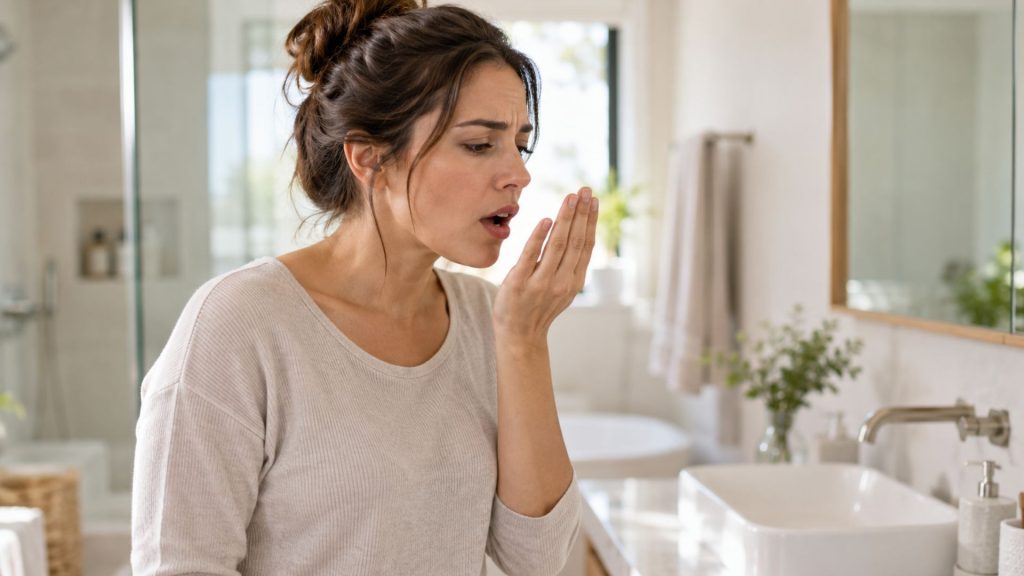
Most bad breath starts in the mouth. Bacteria in plaque, on the tongue and around the gums break down food particles and release smelly compounds. Good daily cleaning, including your tongue and between your teeth, solves many cases. If bad breath lasts for more than a few weeks despite a good routine, a dental hygienist or dentist can help find the cause.
This guide covers the common causes of bad breath, what you can do at home, and when to book an appointment.
What causes bad breath?
Bad breath, also called halitosis, usually has a simple explanation. The NHS lists these common causes:
- Plaque and food debris. Bacteria feed on food left on and between teeth, and on the coating of the tongue.
- Gum disease, tooth decay or infection. Inflamed gums and decayed teeth give bacteria more places to collect.
- Strong-smelling food and drink. Garlic, onions, spices, coffee and alcohol can affect your breath for hours.
- Smoking. Tobacco leaves its own smell and also raises the risk of gum disease.
- Dry mouth. Saliva washes bacteria away. When your mouth is dry, odour builds up more quickly.
- Fasting or crash dieting. Going without food for long periods can change the smell of your breath.
- Some medical conditions, such as tonsillitis and acid reflux.
Morning breath is normal. Saliva flow drops while you sleep, so bacteria have a chance to multiply overnight.
The tongue: an often-missed source
The surface of the tongue is rough, and bacteria settle easily in its grooves, especially towards the back. Many people brush their teeth carefully but never clean their tongue.
Cleaning your tongue once a day with a tongue scraper or cleaner is one of the simplest ways to improve your breath. Work from back to front with gentle pressure, and rinse the scraper as you go.
How to get rid of bad breath at home
For most people, these habits make a clear difference within a few weeks:
- Brush twice a day for two minutes with fluoride toothpaste, gently covering your teeth and the gum line.
- Clean between your teeth once a day with floss or interdental brushes. Food trapped between teeth is a common source of odour.
- Clean your tongue daily.
- Do not rinse with water straight after brushing. Spit out the toothpaste instead, so the fluoride stays on your teeth for longer.
- Stay hydrated. Drinking water through the day helps if your mouth tends to feel dry.
- Cut down on sugary food and drink, which feed the bacteria that cause decay and odour.
- Use sugar-free gum or mints after strong-smelling food. They help short term but do not treat the cause.
- Get support to stop smoking if you smoke.
The NHS also suggests trying an antibacterial mouthwash or toothpaste. Mouthwash can freshen breath, but it does not replace brushing and cleaning between your teeth. It can also mask a problem that needs treatment.
When bad breath may point to a dental problem
Bad breath that keeps coming back can be a sign that something in your mouth needs attention. Look out for:
- gums that bleed when you brush or floss
- red, swollen or tender gums
- a bad taste that does not go away
- toothache or sensitivity
- teeth that feel loose
These can be signs of gum disease, tooth decay or infection, and they need a professional check.
How a dental hygienist can help with bad breath
Even with a careful routine, hardened plaque, called tartar or calculus, can build up where a toothbrush cannot reach, particularly below the gum line. Tartar cannot be brushed away, and it gives bacteria a rough surface to cling to.
At a hygiene appointment, a dental hygienist can:
- remove plaque and tartar from above and below the gum line
- check your gums for signs of gum disease
- show you how to clean your tongue and between your teeth effectively
- recommend cleaning tools that suit your mouth
- refer you to a dentist if they find decay, infection or another problem that needs treatment
For many people, a professional clean plus a better routine at home is enough to clear up persistent bad breath. You can read more about the appointment in our article on what a dental hygienist does, and about recall intervals in how often to see a dental hygienist.
When to book an appointment
The NHS advises seeing a dental professional if bad breath does not go away after treating it yourself for a few weeks. Book sooner if you also have painful, bleeding or swollen gums, toothache, or loose teeth.
If your teeth and gums are healthy and bad breath continues, your hygienist or dentist may suggest you talk to your doctor, because a small number of cases have a cause outside the mouth.
Frequently asked questions
Why do I have bad breath even though I brush twice a day?
Brushing alone misses the tongue and the spaces between your teeth, which are common sources of odour. Tartar below the gum line can also cause bad breath and needs professional removal.
Does mouthwash cure bad breath?
Mouthwash can freshen your breath for a while, and an antibacterial mouthwash may help. It does not remove plaque or tartar, so it works best alongside brushing, tongue cleaning and cleaning between your teeth.
Can a dental hygienist get rid of bad breath?
If your bad breath comes from plaque, tartar or gum inflammation, a professional clean and better home care often make a big difference. If the cause is decay or something outside the mouth, the hygienist can point you to the right next step.
Is morning breath normal?
Yes. Saliva flow slows overnight, which lets bacteria build up. Brushing and cleaning your tongue in the morning usually clears it.
How can I tell if I have bad breath?
It can be hard to notice your own breath. Asking someone you trust, or noticing a persistent bad taste, are the most reliable signs.
Book a dental hygiene appointment
If bad breath is bothering you, dental hygienist Jenny would be delighted to help with a scale and clean, plaque and tartar removal, and personalised gum-health support. Based in Prebbleton, Village Hygienist welcomes patients from across Christchurch, surrounding towns and rural communities who value Jenny’s personal approach to care. Contact us to book your dental hygiene appointment.