Quick Answer: Dentures are custom-made removable replacements for missing teeth. They restore your ability to eat, speak, and smile — and modern dentures are made to look natural enough that most people cannot tell the difference. In New Zealand, dentures are provided by Clinical Dental Technicians (CDTs) who can be seen directly without a dentist referral.
What Are Dentures?
Dentures are prosthetic teeth set into an acrylic or metal base that sits on the gums. They replace teeth that have been lost through decay, gum disease, injury, or age. They can replace a few teeth, all the teeth in one jaw, or both upper and lower arches.
Modern dentures are far more comfortable, natural-looking, and well-fitting than the dentures of a generation ago. Digital scanning technology, improved acrylic materials, and better understanding of how gums and bone change over time have all contributed to a dramatically better product than patients experienced 20 or 30 years ago.
The Main Types of Dentures
Full Dentures (Complete Dentures)
A full denture replaces all the teeth in one or both jaws. It rests on the gum tissue and is held in place by suction and the natural shape of the gum ridge. Full dentures are removed at night for cleaning.
Most patients wear both an upper and a lower full denture, though some have natural teeth remaining in one jaw and only need a full denture in the other. Upper full dentures are generally easier to stabilise than lower ones because the palate creates a larger suction surface.
Partial Dentures
A partial denture replaces one or more teeth when healthy natural teeth remain. It clips onto or rests around the remaining teeth. Partial dentures serve two purposes: restoring the appearance and function of the gap, and preventing the natural teeth from drifting out of position.
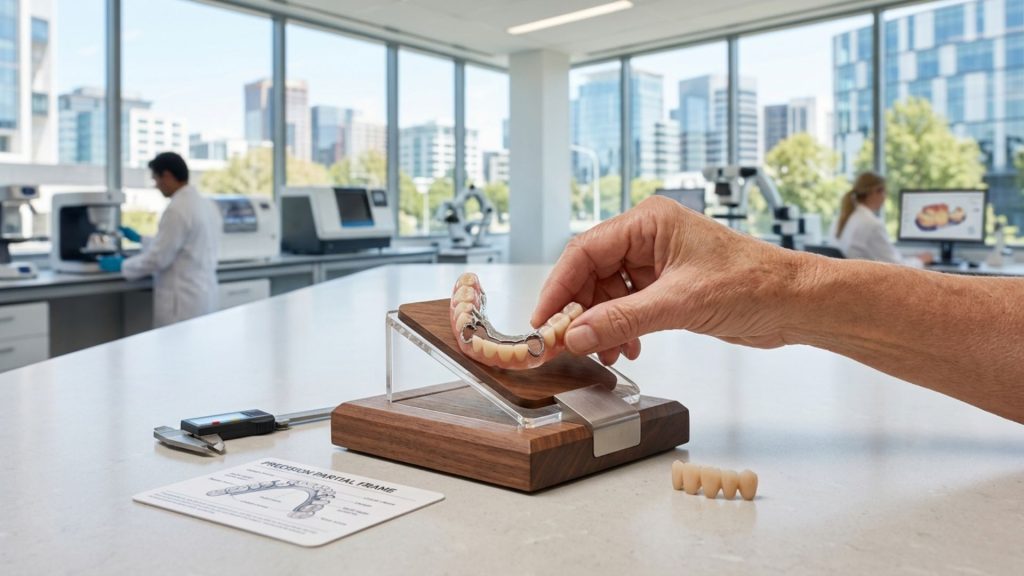
The most common partial denture types are acrylic partials (more affordable, easy to adjust), flexible nylon partials (no visible metal, good for front teeth), and metal framework partials (thinner, more durable, better for long-term wear).
Immediate Dentures
An immediate denture is made before your teeth are removed and fitted on the same day as your extractions. You are never without teeth during the healing period. As the gums heal and change shape, adjustments and eventually a reline are needed to maintain the fit.
Implant Overdentures
An implant overdenture clips onto dental implants placed in the jawbone. This gives the denture a secure, stable anchor — preventing the movement that conventional full dentures can develop, particularly in the lower jaw. Implant overdentures are not permanently fixed; they are still removed for cleaning.
How Are Dentures Made?
At Village Denture Studio, the process starts with a free consultation where Jimmy Chao assesses your mouth and discusses your goals. Digital impressions are then taken using an intraoral scanner — more comfortable and more accurate than traditional moulds.
The scanned data is used to design the denture digitally before fabrication. A wax try-in model is made first, allowing you to see and feel how the teeth will look before anything is finalised. The finished denture is then hand-finished by Jimmy to ensure the aesthetics are natural and personalised. Total time from consultation to fitted denture is typically four to six weeks.
What Does Getting Used to Dentures Feel Like?
The adjustment period for new dentures is real but temporary. Most patients notice:
- Increased saliva: The mouth treats the denture as a foreign object initially and produces extra saliva. This settles within a few days.
- Speech changes: Certain sounds — particularly ‘s’ and ‘th’ — may be slightly different at first. Most patients find their speech has returned to normal within two to three weeks.
- Eating adjustment: Start with soft foods cut into small pieces. Chew on both sides of the mouth to distribute the load evenly. Most patients are eating normally within three to four weeks.
- Minor tenderness: Some soreness around the gum edges is normal in the first week. Specific pressure points that do not resolve should be checked at a follow-up appointment.
Wearing the denture consistently — rather than removing it whenever it is uncomfortable — speeds up the adjustment process.
Caring for Your Dentures
Dentures need daily cleaning to prevent staining, odour, and bacterial buildup:
- Remove and rinse the denture after every meal
- Clean with a soft denture brush and mild denture cleaner — not regular toothpaste, which is too abrasive
- Soak overnight in water or a denture cleaning solution — keeps the material from drying out
- Clean your gums, tongue, and any remaining natural teeth while the denture is out
- Keep the denture away from hot water, which can warp the acrylic
How Long Do Dentures Last?
A well-maintained set of dentures typically lasts seven to ten years before replacement becomes necessary. The denture itself may remain intact, but the gums and underlying bone change shape over time — causing the denture to fit less accurately and function less well.
Regular check-ups with your CDT allow these fit changes to be caught early. A reline — adding new material to the fitting surface of the denture — can extend the life of the denture significantly without requiring a full replacement.
Getting Dentures at Village Denture Studio
Village Denture Studio is based in Prebbleton, Christchurch, with a weekly Invercargill clinic. Led by CDT Jimmy Chao with over 15 years of experience, we use German-made equipment and intraoral scanning technology with in-house hand-finishing for every denture we make. First consultations are free. Contact us on 03 222 3886 to book.
Frequently Asked Questions
Do dentures look fake?
Modern dentures made with quality materials are designed to look natural — matching the shape, shade, and translucency of real teeth. At Village Denture Studio, Jimmy Chao hand-finishes every denture after the digital fabrication stage to ensure the result looks individualised rather than generic. The shade, size, and shape of the teeth are selected based on the patient’s facial structure and preferences. Most people cannot tell that a well-made, well-fitted modern denture is not natural teeth.
Can you eat normally with dentures?
Yes, though an adjustment period of two to four weeks is normal. During the first week, soft foods are recommended. By weeks three to four, most patients are eating a wide range of foods. Some patients choose to avoid very hard or sticky foods permanently — hard lollies, sticky toffee, and very tough meats can damage or dislodge dentures. Otherwise, eating with well-fitted dentures should feel comfortable and natural.
Can I sleep with my dentures in?
It is generally recommended to remove dentures at night. Taking them out gives the gum tissue a period of rest from the pressure of the denture throughout the day, which reduces the risk of gum irritation and slows the rate of bone resorption under the denture. Soaking dentures overnight also keeps the acrylic from drying out and maintains the shape. If removing dentures at night is uncomfortable, speak to your CDT about why this might be and whether a different fitting approach could help.